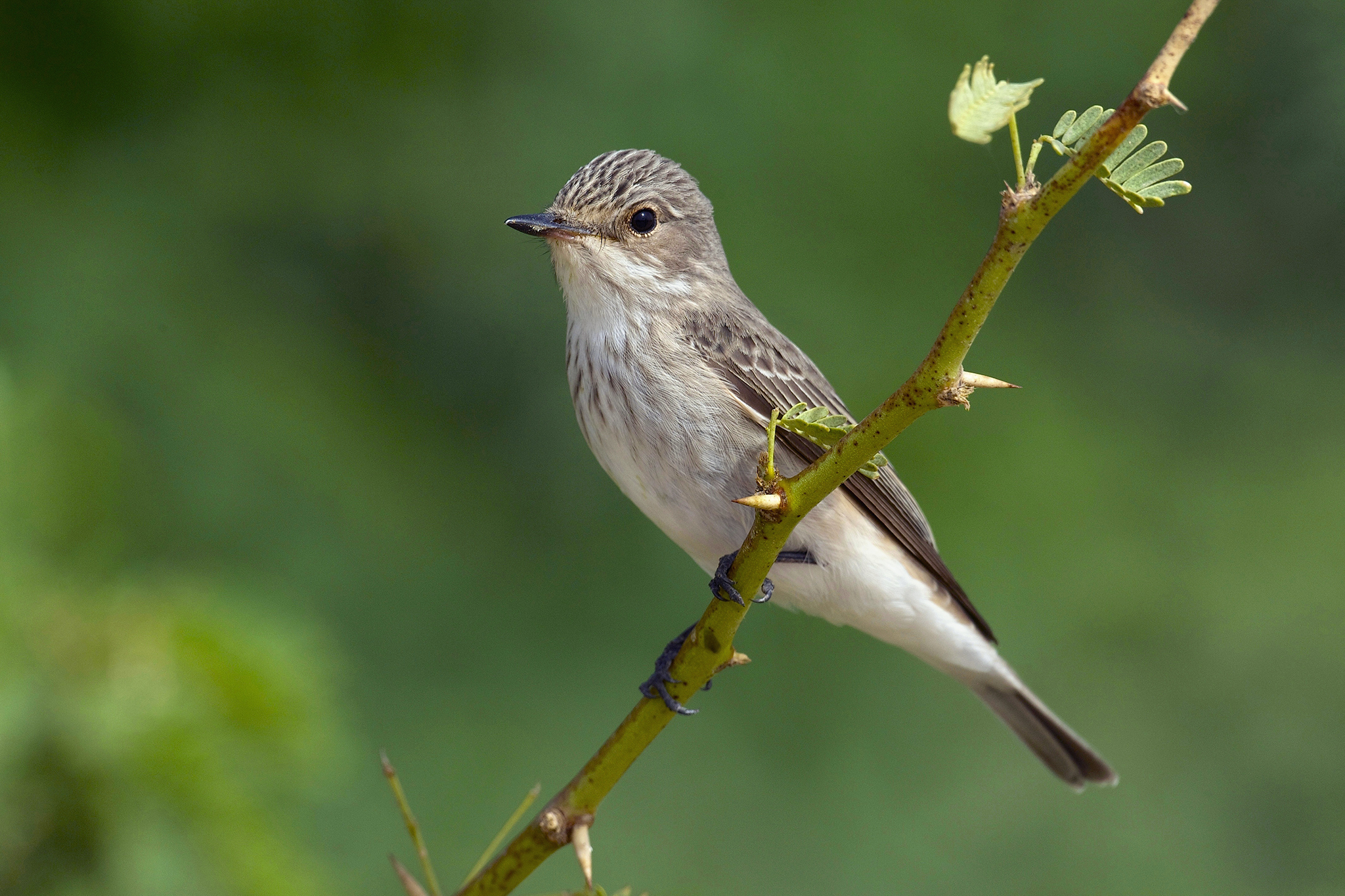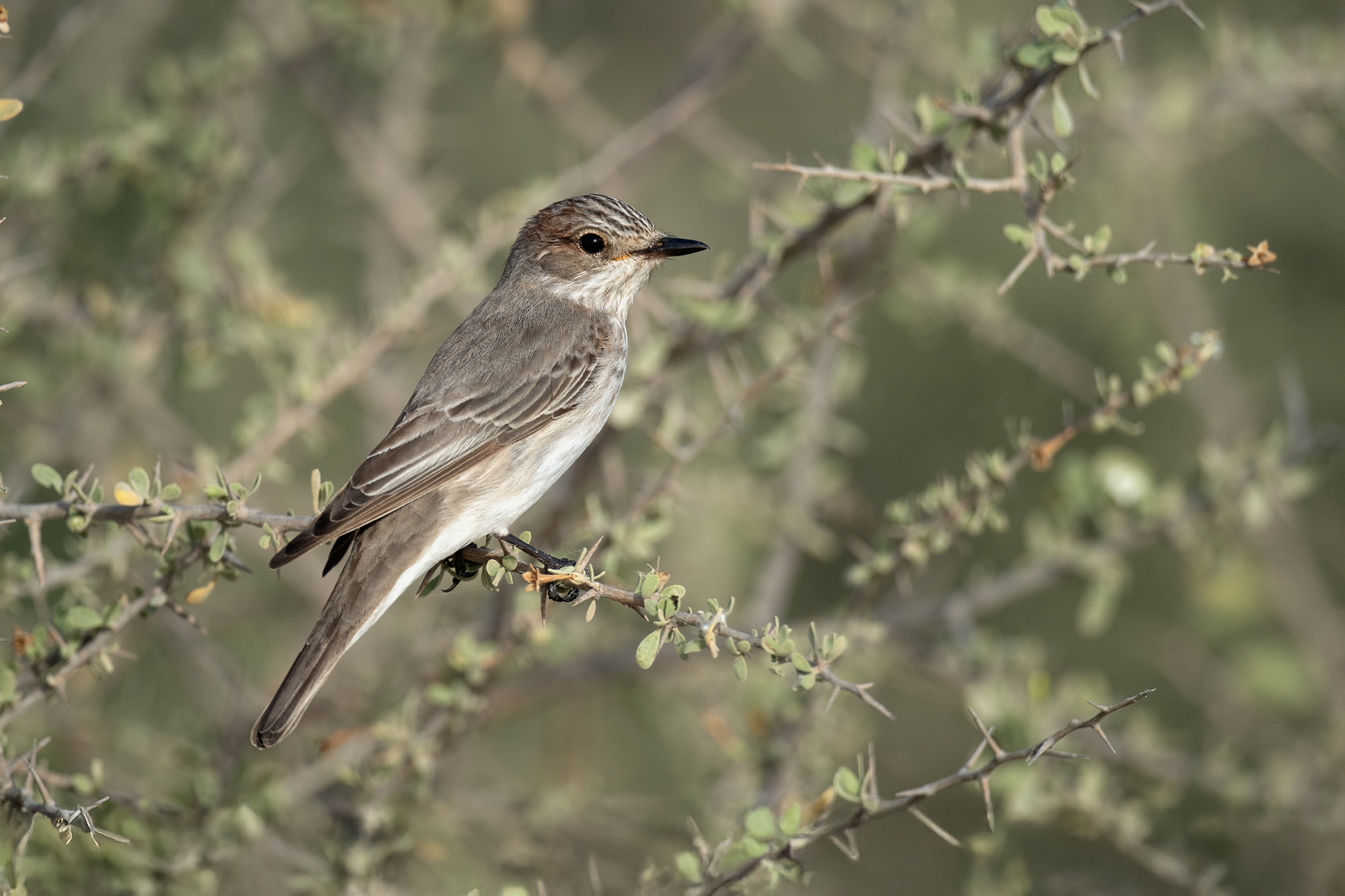



| The
Spotted Flycatcher is an abundant passage migrant during spring and autumn,
known for its extraordinary migratory journeys covering tens of thousands of
miles annually. This bird is a skilled aerial hunter, commonly found in areas
with trees and bushes where it perches patiently, watching for prey. Migration and Status: A remarkable long-distance migrant that travels vast distances between its breeding and wintering grounds. Most active during spring (late April to May), with occasional sightings extending into early June, and a brief return in September during autumn migration. Habitat: Found almost anywhere with suitable vegetation, such as trees, bushes, or wooded areas. Frequently seen perched on branches, posts, or other exposed spots, waiting for passing insects. Hunting Behavior: Hunting Style: Perches upright with patience, scanning for flying insects. Launches sudden, quick flights to catch prey mid-air using fluttering twists and turns. Returns to its perch to consume the catch, often producing a loud snapping sound as its bill closes around the prey. Prey: Primarily feeds on flying insects but will also forage on the ground for caterpillars. Identification: Size and Appearance: Medium-sized bird with greyish-brown plumage. Features a streaked forehead and faint streaking on the breast, key markers for identification. Migration Timeline: Spring Migration: Peak activity from late April to May, with occasional sightings in early June. Autumn Migration: Brief return during September. Summary: The Spotted Flycatcher is a graceful and efficient hunter, easily recognized by its streaked forehead, upright perching stance, and elegant aerial pursuits. Its seasonal migrations, characteristic feeding behavior, and widespread presence during passage make it a fascinating bird to observe. |



© 2026 Qatar Bird Observation Group