
| The
Blackcap is a handsome medium-sized warbler, primarily observed as a spring
and autumn passage migrant. It is commonly found in bushes and trees within
parklands, farmland, and oases. It actively feeds on insects and fruits,
moving quickly through foliage and seeking deeper cover when disturbed. This
species frequents areas where it can find ample insect prey and
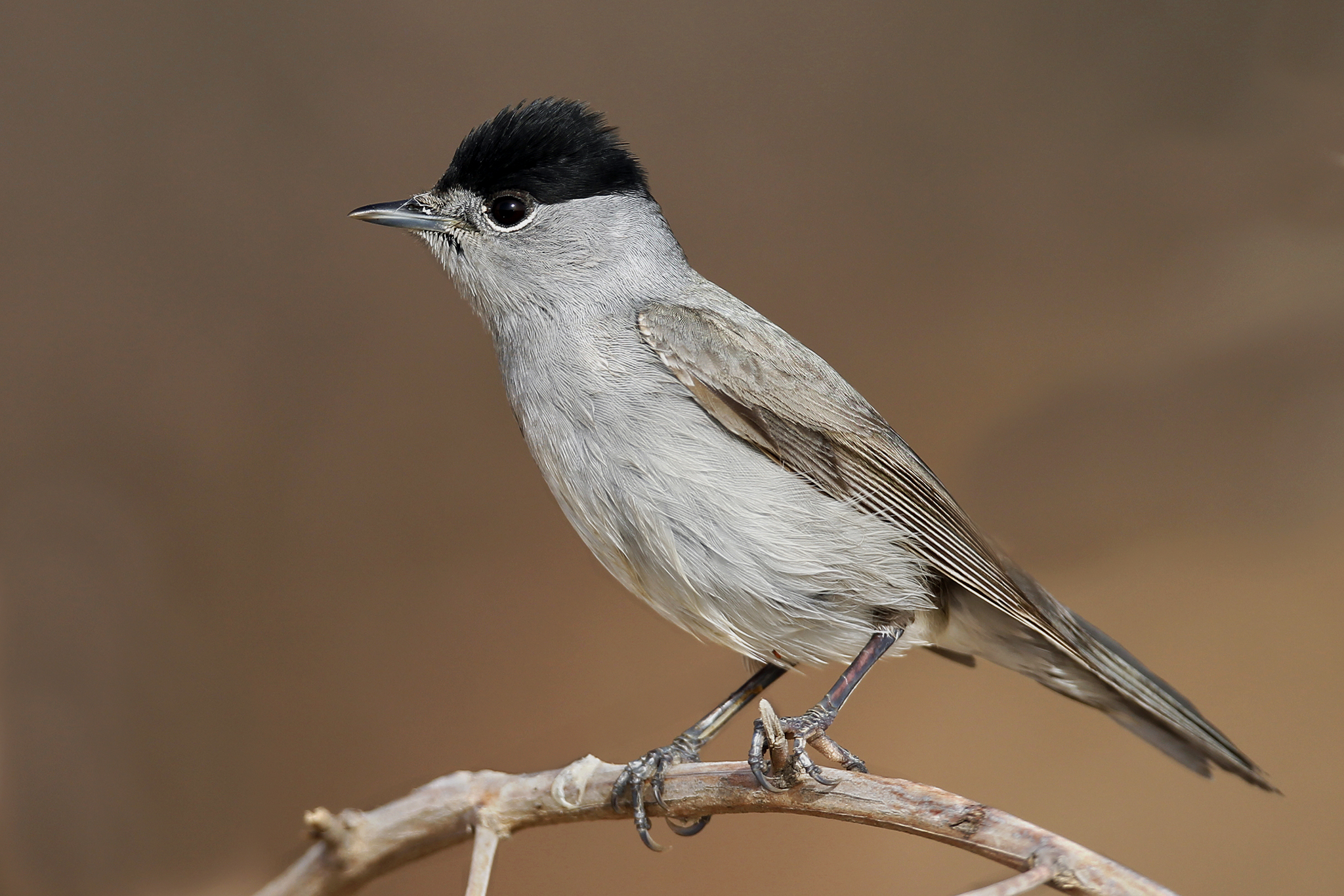
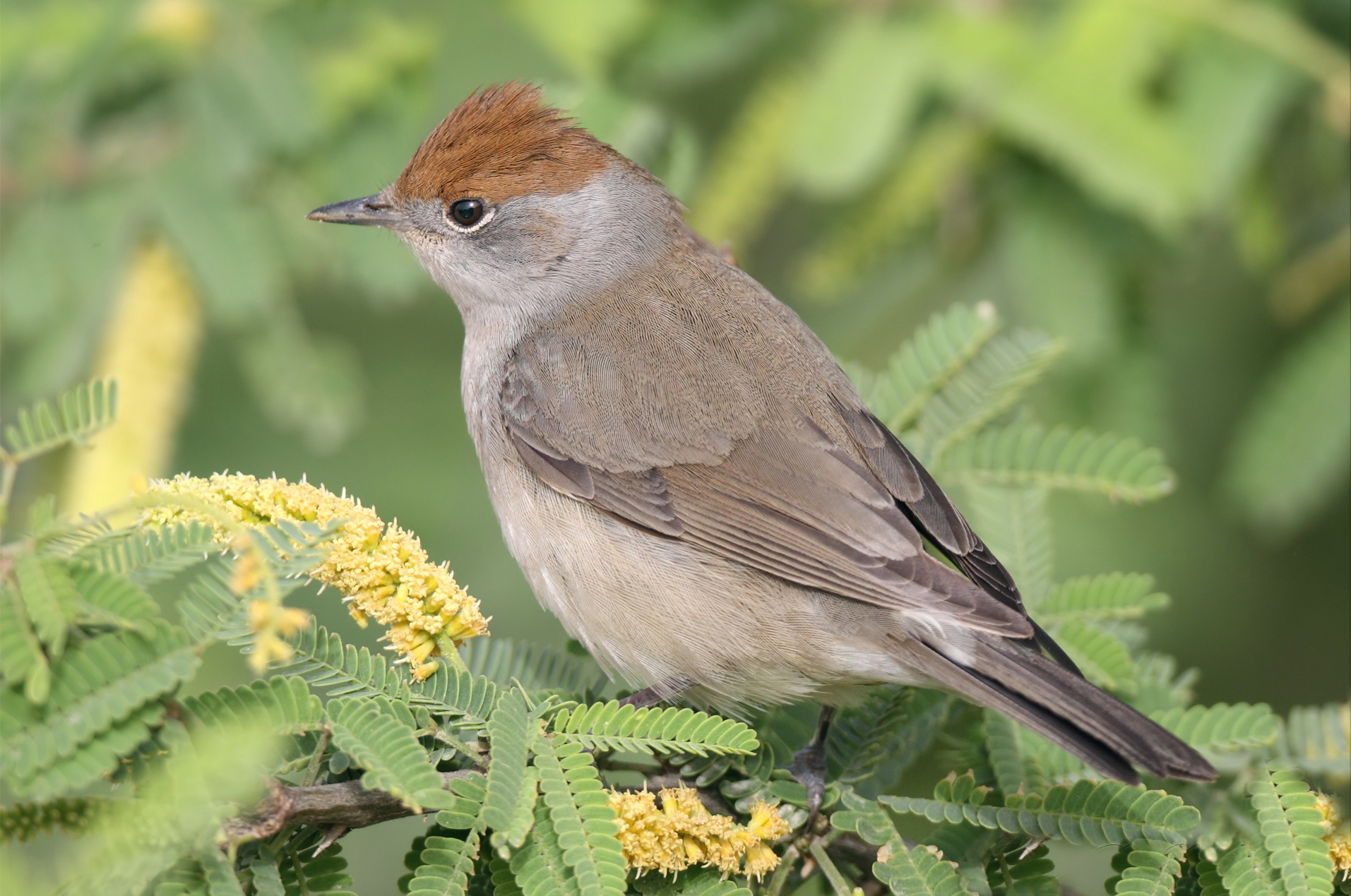
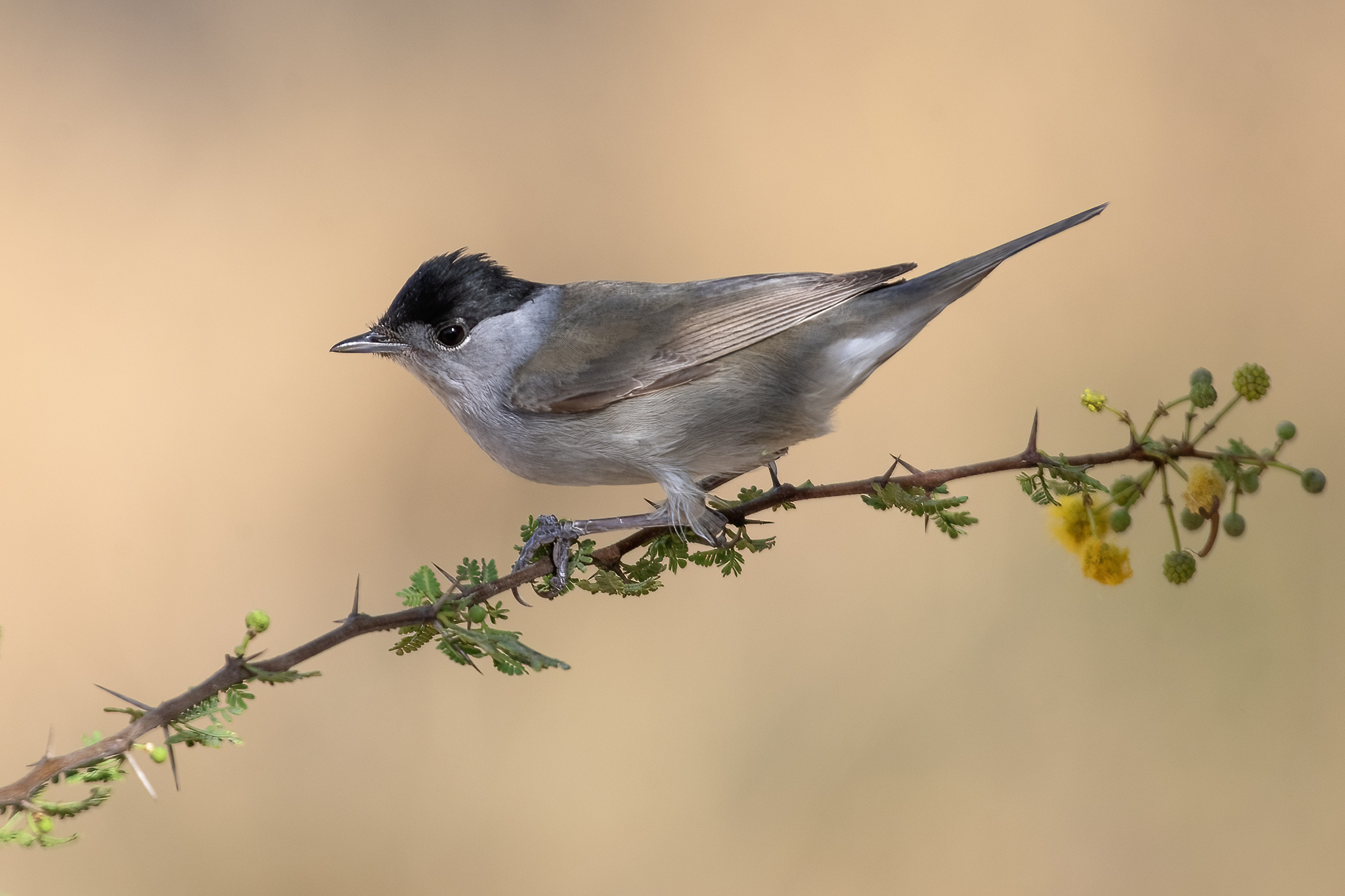
berries. Habitat & Behavior The Blackcap is often seen in areas with trees and bushes, including parklands and farmland. It thrives in environments with dense vegetation, providing food and cover. Its diet consists mainly of insects, but it also feeds on fruits and berries, depending on availability. Appearance & Physical Characteristics Male: The male Blackcap has a striking slate-grey body with a darker grey back, wings, and tail. Its most distinctive feature is the solid black cap on its head. Female and Immature Birds: These birds display a lighter greyish-brown color, with a reddish cap instead of black. The bird moves quickly through foliage, showcasing its agile and energetic nature. Call The Blackcap is renowned for its melodious, rich warbling song, often ending in a loud, high-pitched crescendo. This song is delivered in bursts lasting up to 30 seconds and repeated with short pauses. Additionally, Blackcaps produce a characteristic "tac-tac" call, resembling the sound of stones knocking together, often used as a contact or alarm call. Size and Comparison The Blackcap is a medium-sized warbler, slightly larger than other warblers, with a compact and sleek build. Seasonal Presence This species is most commonly observed during migration periods in spring (April) and autumn (October). These are the times when the bird moves through various habitats as it migrates to and from breeding and wintering grounds. |



© 2026 Qatar Bird Observation Group