


| The
Whinchat is a conspicuous small bird and a spring and autumn passage migrant,
often found in open fields, cultivated areas, and low bushes. It perches on
exposed branches, scanning for insects on the ground, and displays
flycatcher-like movements while hunting. It is pale and slender compared to
its close relative, the European Stonechat, and slightly larger with
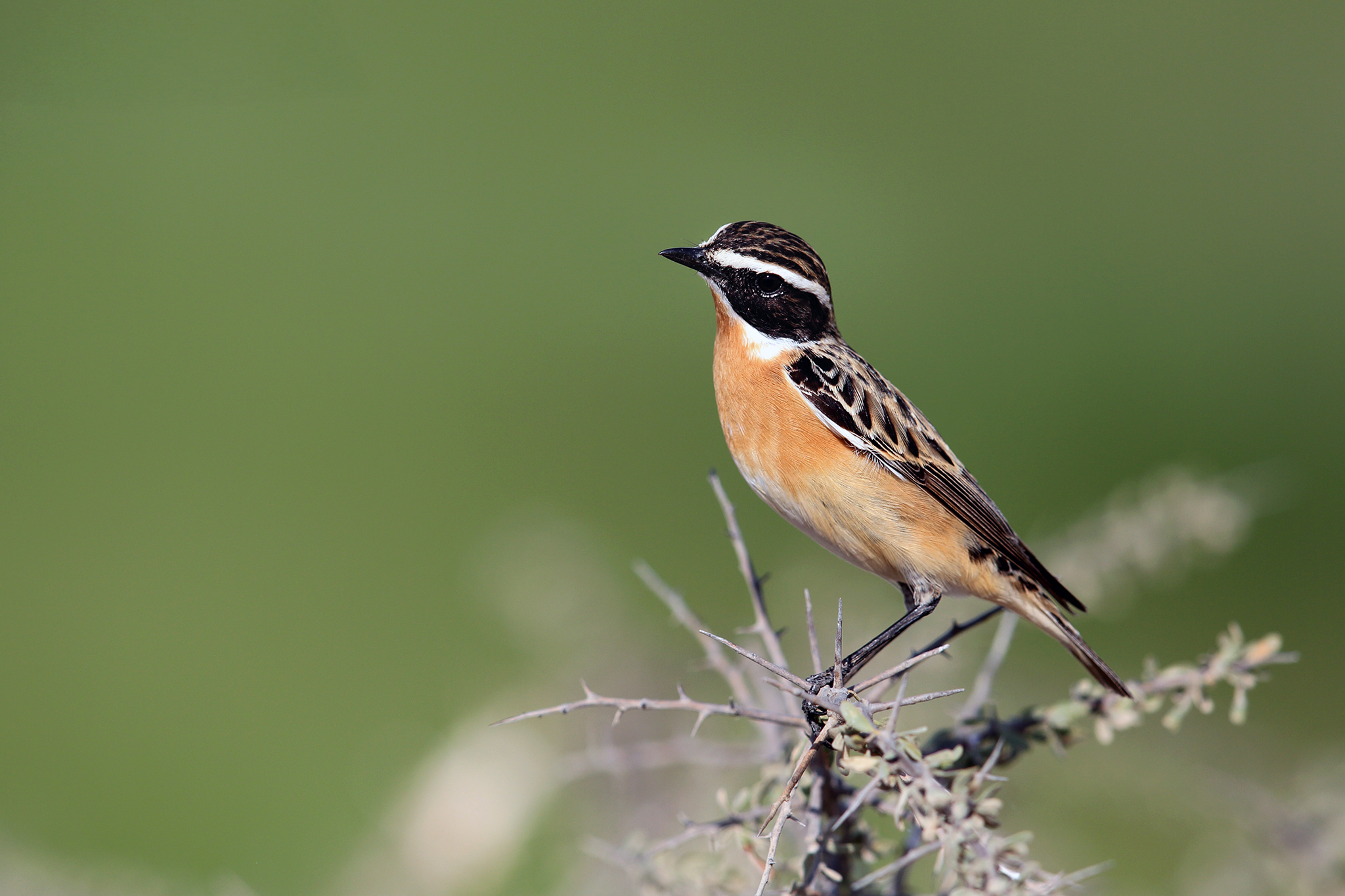
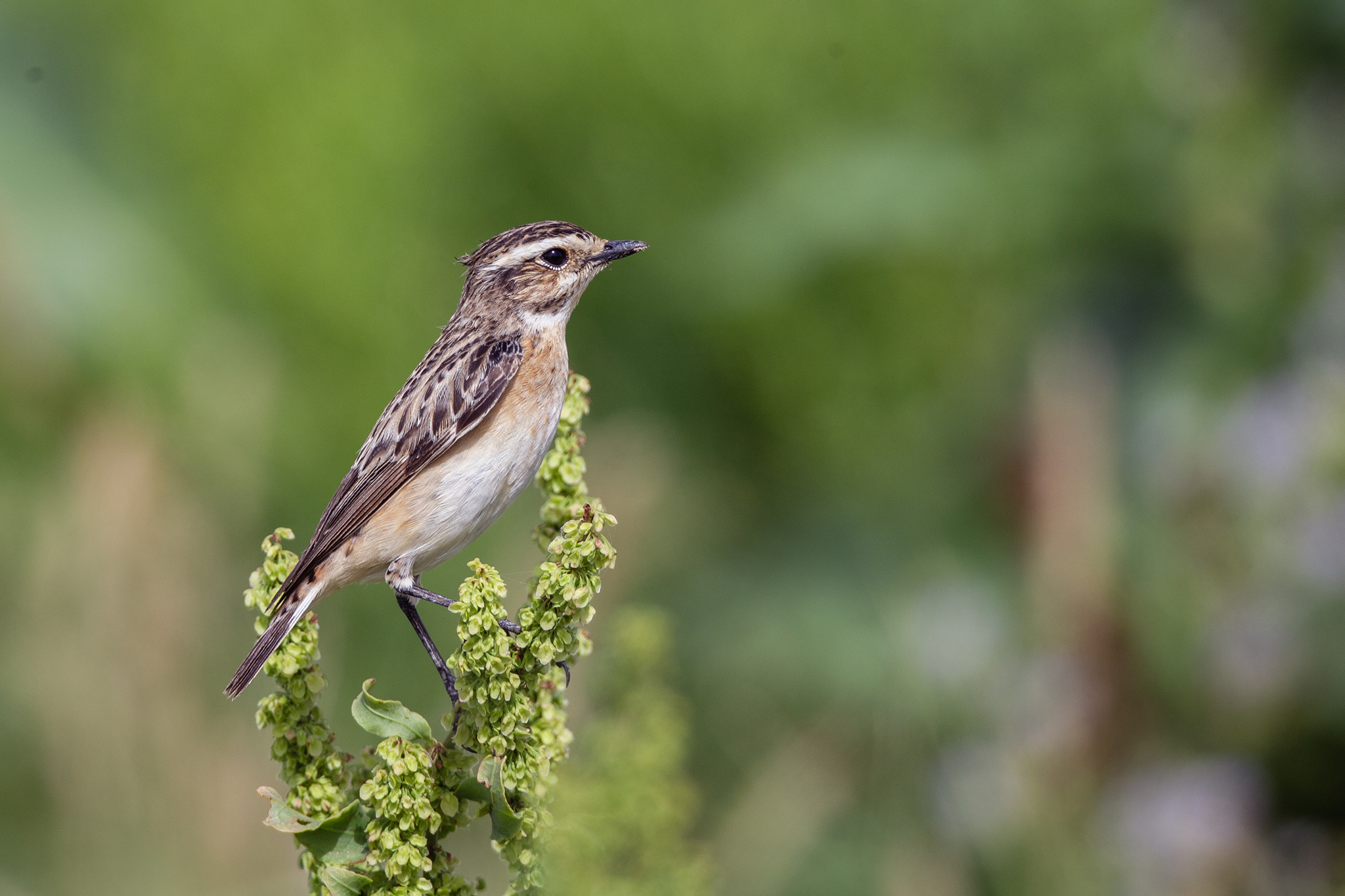
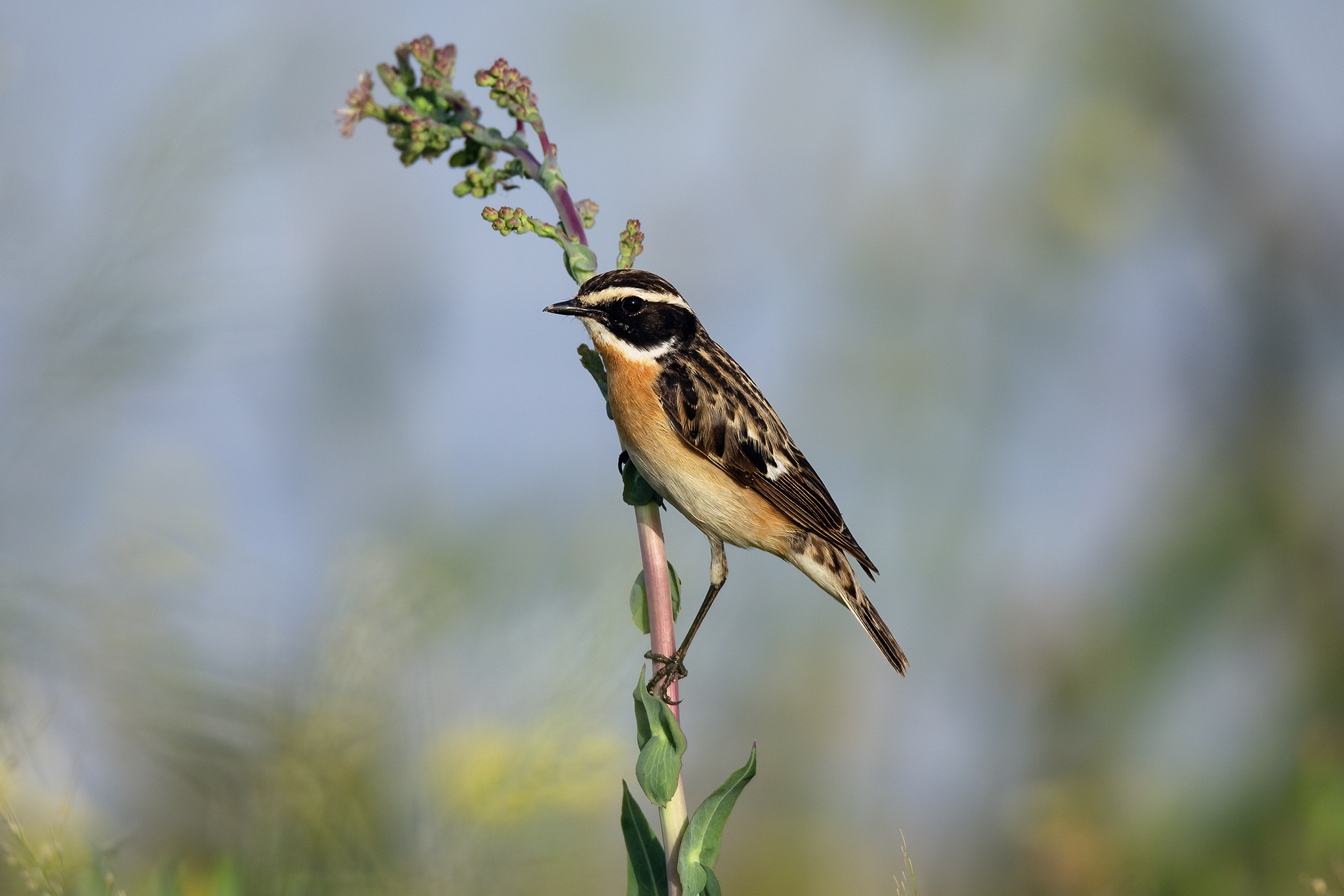
distinctive white patches on the sides of its tail when in flight. Habitat & Behavior The Whinchat is typically seen in open habitats, including fields and low bushes, where it actively hunts for insects. It perches on elevated spots to observe prey before launching short flights to capture it. This bird is primarily observed during migration seasons and prefers areas that provide clear views and ample food supply. Appearance & Physical Characteristics General: The Whinchat has a prominent white stripe above its eye, dark streaky brown plumage on the upperparts, and a warm orange-buff breast. Male: Displays darker cheeks, black ear coverts, and lores, making its facial pattern more distinctive. The white stripe over the eye is brighter in males. Female: Lighter brown overall and lacks the black facial patch seen in males. Both sexes share the characteristic white stripe above the eye. In Flight: Shows distinctive white patches on the sides of the tail. Bill and Legs: Black, adding to its sharp and clean appearance. Call The Whinchat produces a sharp, clicking call often described as "tek-tek." It also sings a soft, melodious song during the breeding season. Size and Comparison The Whinchat is a small bird, slightly larger than the European Stonechat, but paler and slimmer in overall appearance. Seasonal Presence This species is most commonly observed during migration periods in spring (April-May) and autumn (September-October), as it moves through open fields and cultivated areas. |



© 2026 Qatar Bird Observation Group