
| The
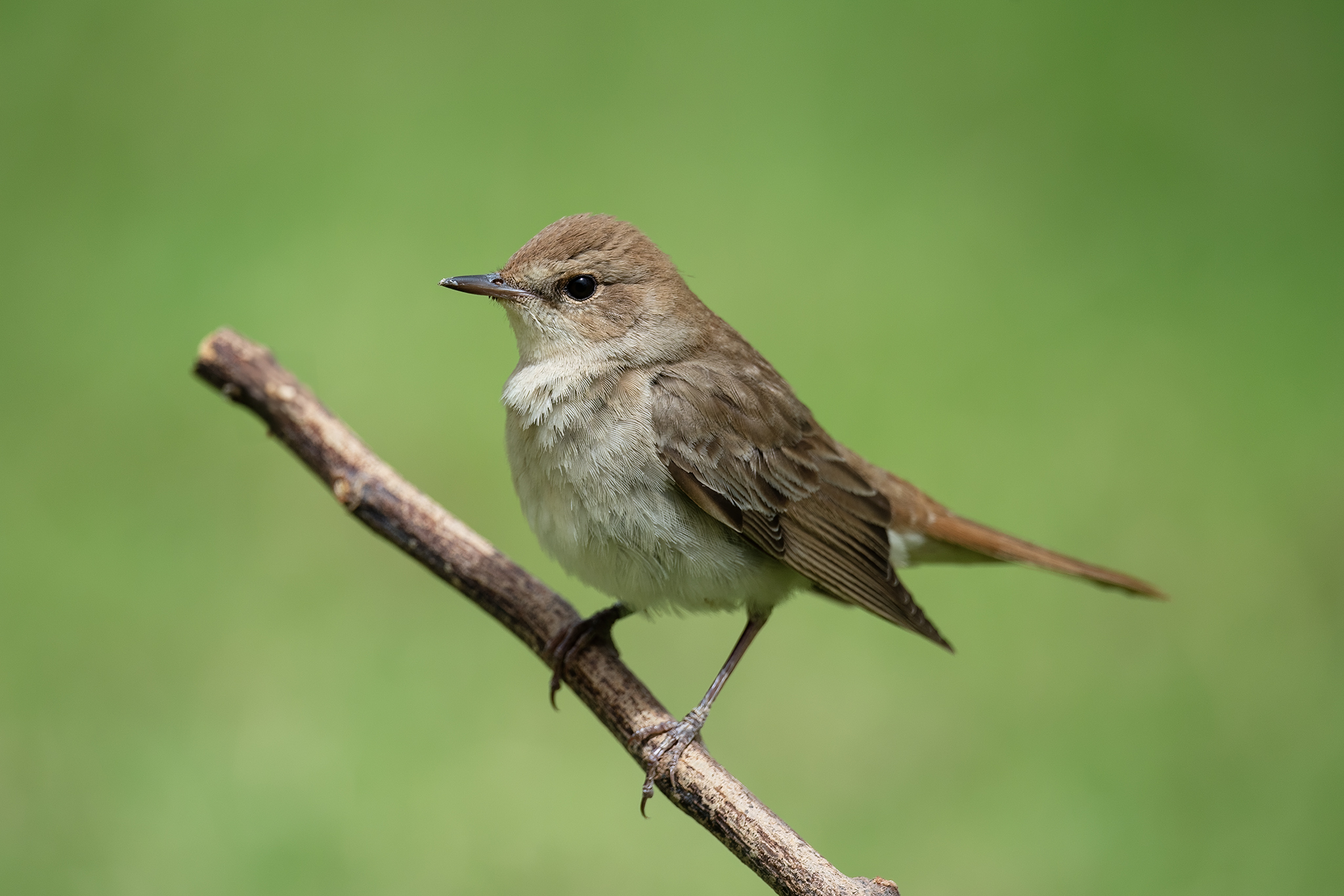
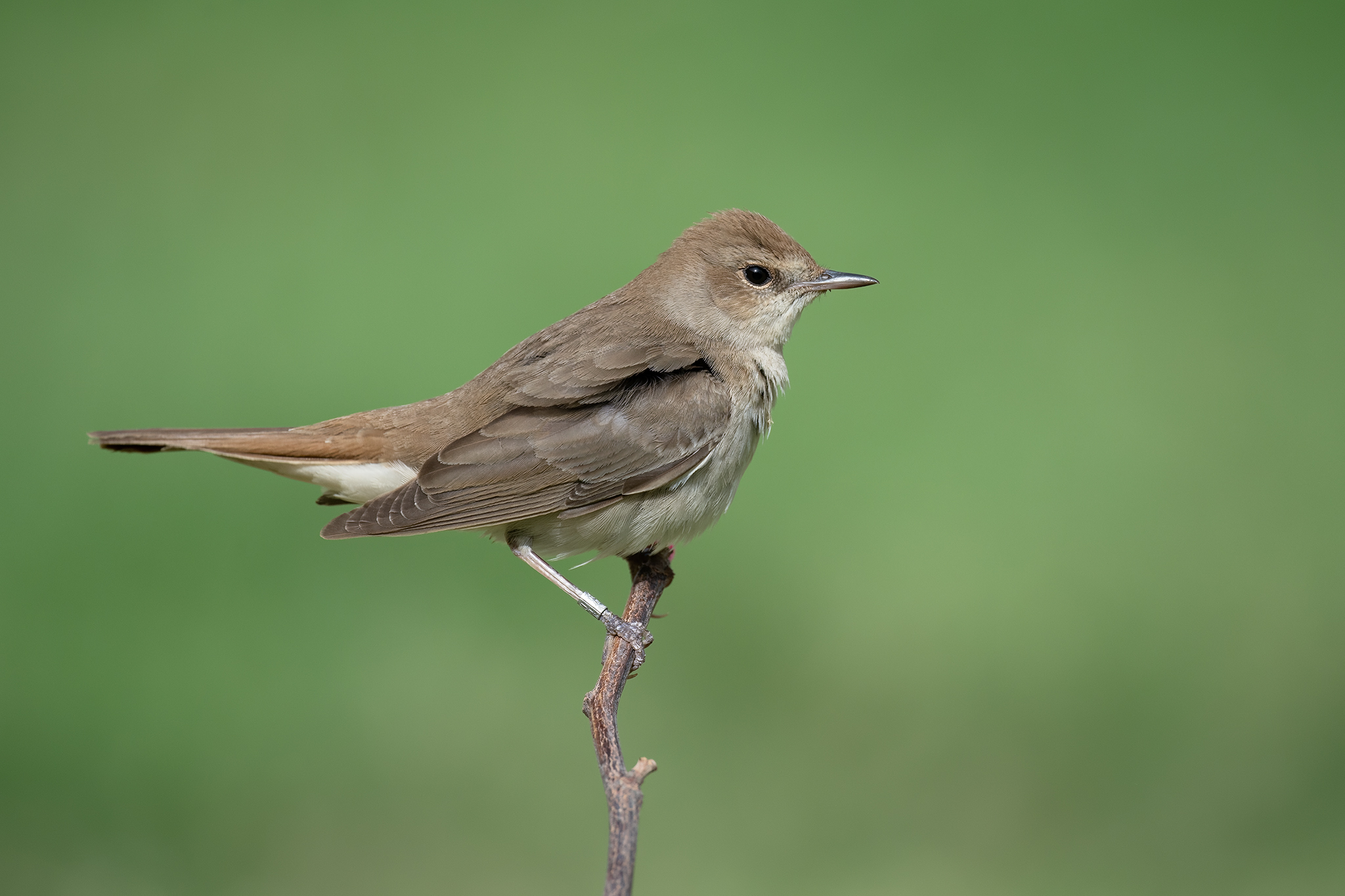
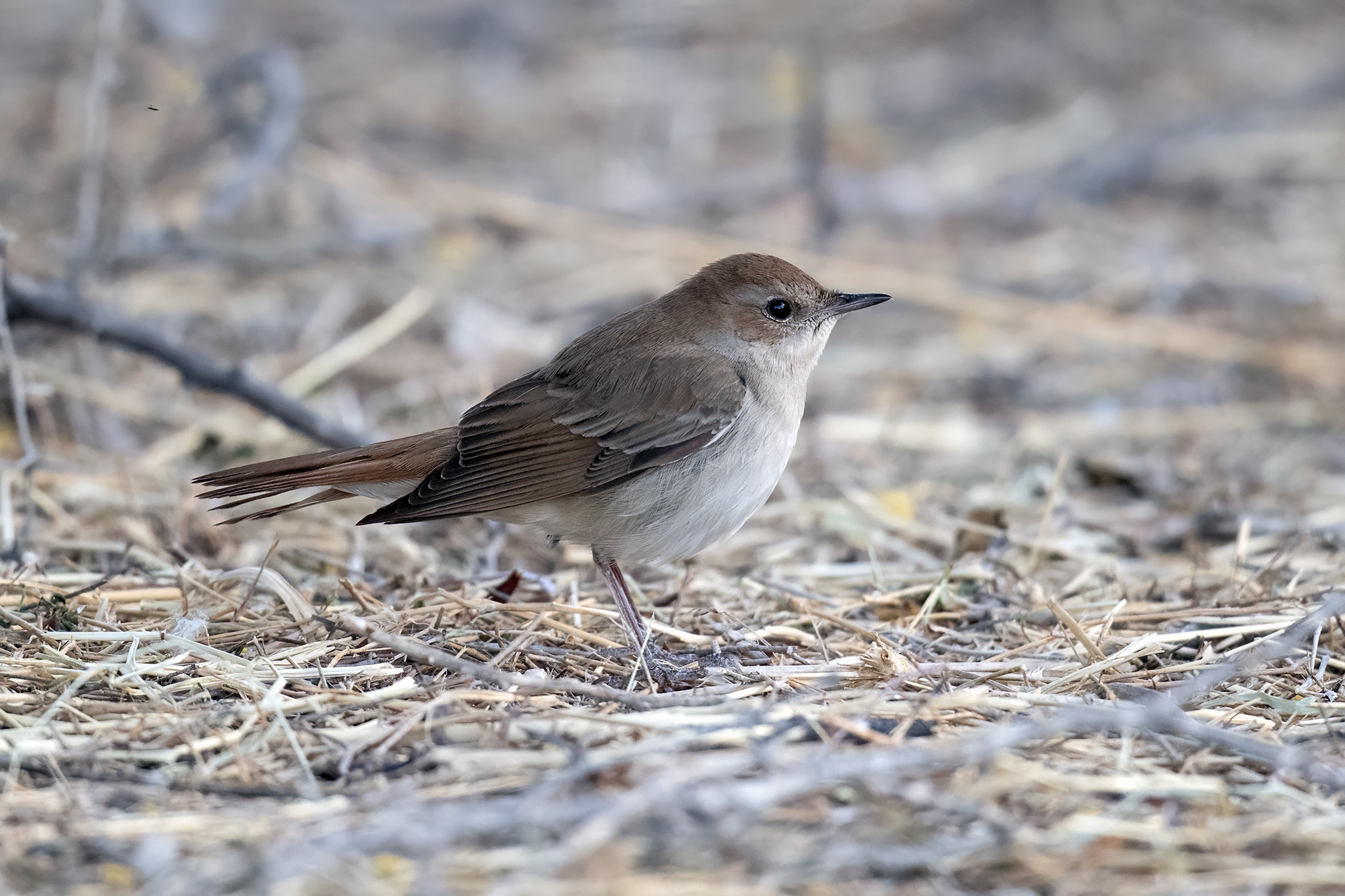
Common Nightingale is a migratory bird
known for its rich and melodious song, warm brown plumage, and rust-colored
tail. It visits Qatar during spring and autumn migrations. It is often
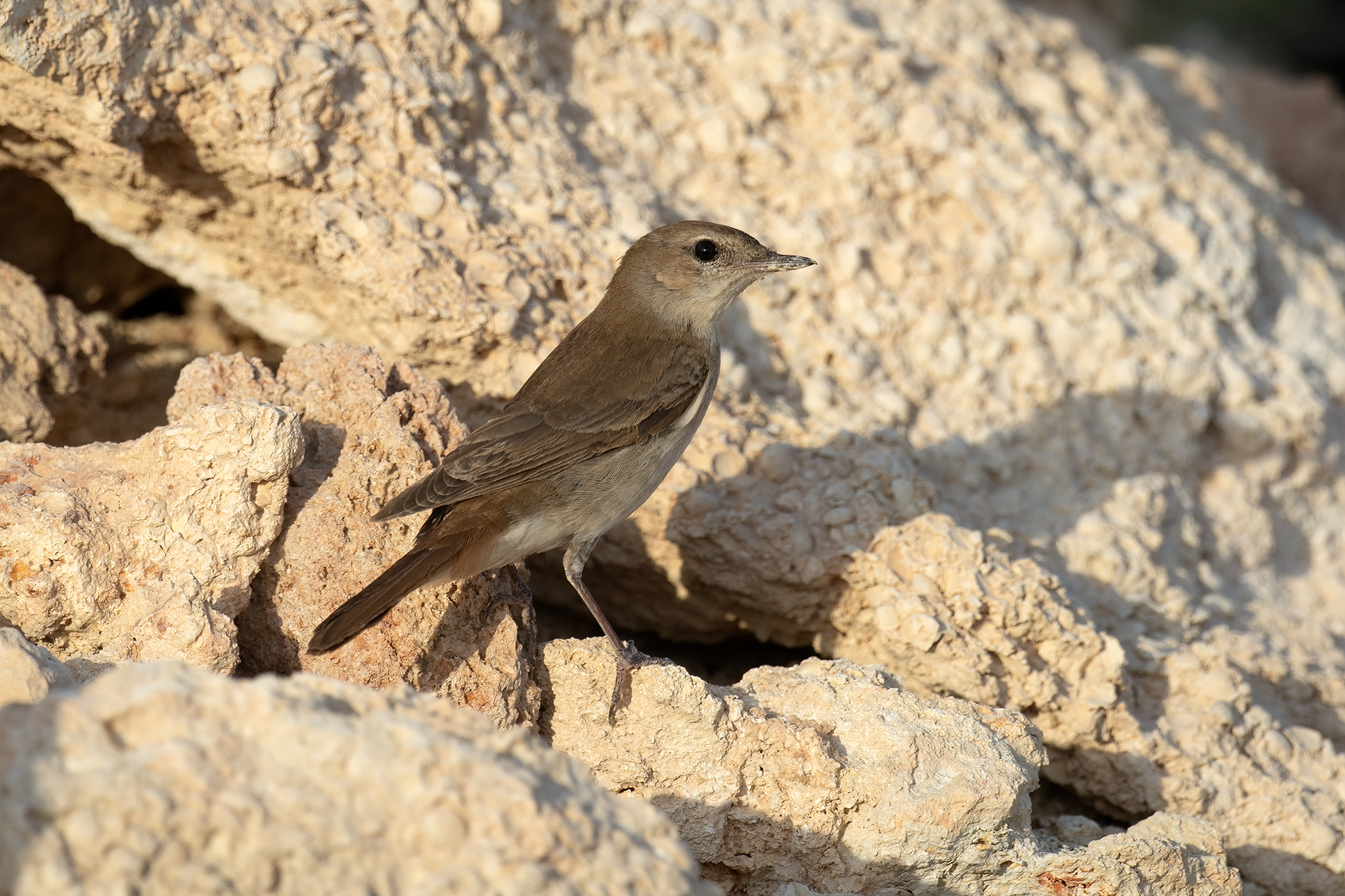
compared with the Eastern Nightingale , which is paler and prefers dry
habitats, and the Thrush Nightingale , which is darker and found in wetter
areas. Habitat & Behavior Common Nightingale : Found in dense thickets, woodland undergrowth, gardens, and parks. It stays low in vegetation or on the ground, foraging for insects and small invertebrates. Migrates between Europe and sub-Saharan Africa during spring and autumn. Eastern Nightingale : Prefers drier habitats like scrublands and steppes. Forages in open areas but stays close to vegetation for cover. Thrush Nightingale : Inhabits wetter environments such as marshy woodlands, riverbanks, and damp thickets. It is more secretive and elusive, often staying hidden in dense vegetation near water. Appearance & Physical Characteristics Common Nightingale : Warm brown upperparts with buff underparts. Vibrant rust-colored tail and pale eye-rings. Eastern Nightingale : Paler, sandier plumage with less vibrant tail coloration. Similar in shape to but with duller colors. Thrush Nightingale : Darker greyish-brown plumage with streaked markings on the breast and flanks. Rust-colored tail, but less vibrant than . Pale eye-rings, like . Size and Comparison All three Nightingales are similar in size, but subtle differences help identify them: Common Nightingale : Richer colors and vibrant rust-colored tail. Eastern Nightingale : Paler and adapted to dry, open areas. Thrush Nightingale : Darker with mottled markings and suited to wetter environments. Seasonal Presence Common Nightingale : Seen in Qatar during spring (March to May) and autumn (August to September) as it migrates between Europe and sub-Saharan Africa. Eastern Nightingale : Migrates between Central Asia and the Indian subcontinent, but not commonly seen in Qatar. Thrush Nightingale : Breeds in Eastern Europe and Siberia and winters in East Africa, passing through Qatar less frequently than . Song Common Nightingale : Renowned for its rich and varied song, including whistling, trills, and rhythmic tones. Eastern Nightingale : Similar to but softer and less complex. Thrush Nightingale : A harsher, more mechanical song, lacking the lyrical quality of . Summary of Differences Common Nightingale : Vibrant, melodious, and prefers dense vegetation. Eastern Nightingale : Paler, adapted to dry areas, with a softer song. Thrush Nightingale : Darker, prefers wetter habitats, with a harsher song. These distinctions may be subtle and require careful observation to identify each species accurately in the field. |



© 2026 Qatar Bird Observation Group