


| The
Black-eared Wheatear is a passage migrant that visits Qatar during specific
times of the year. It is recognized for its unique appearance and
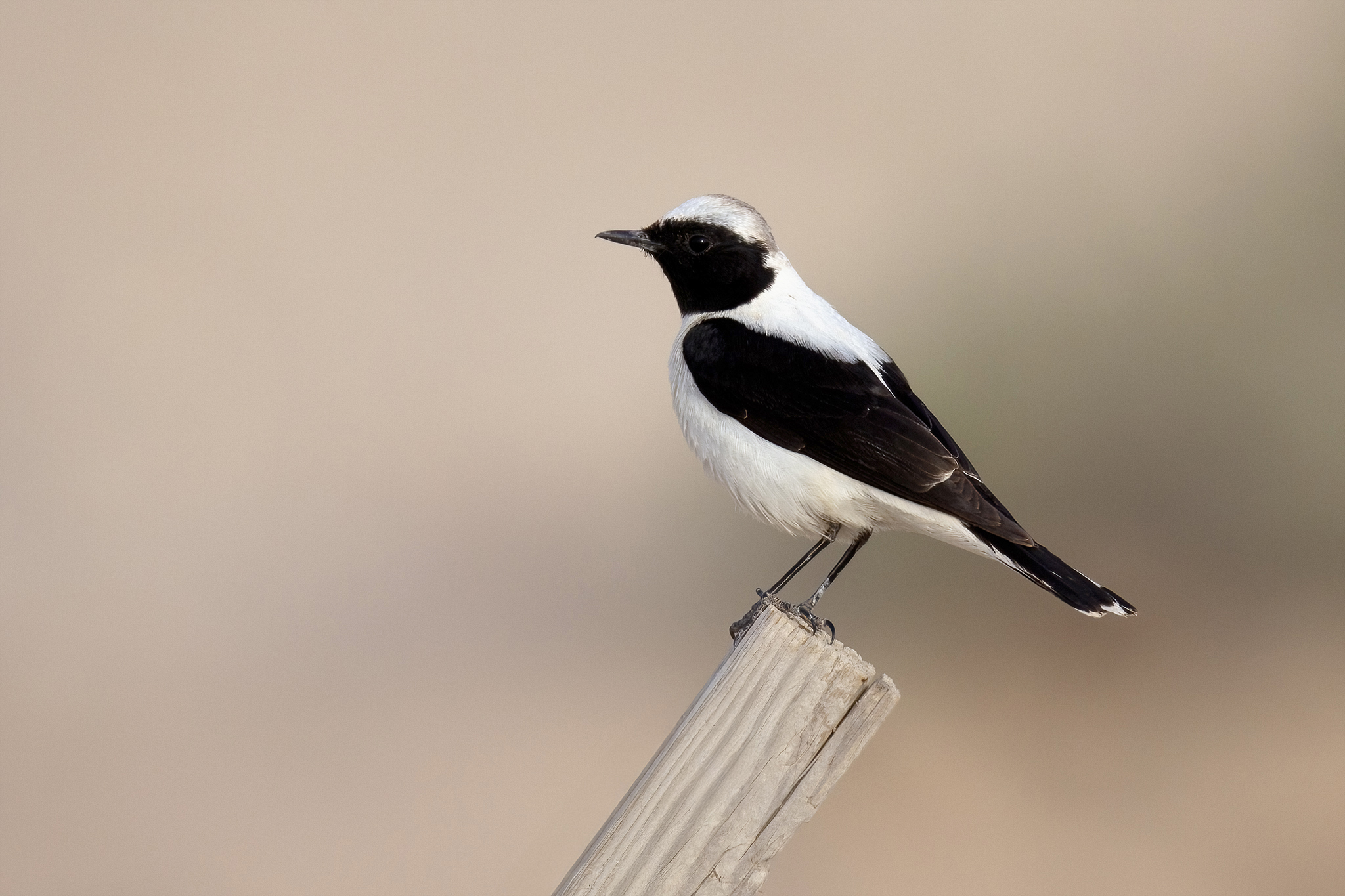
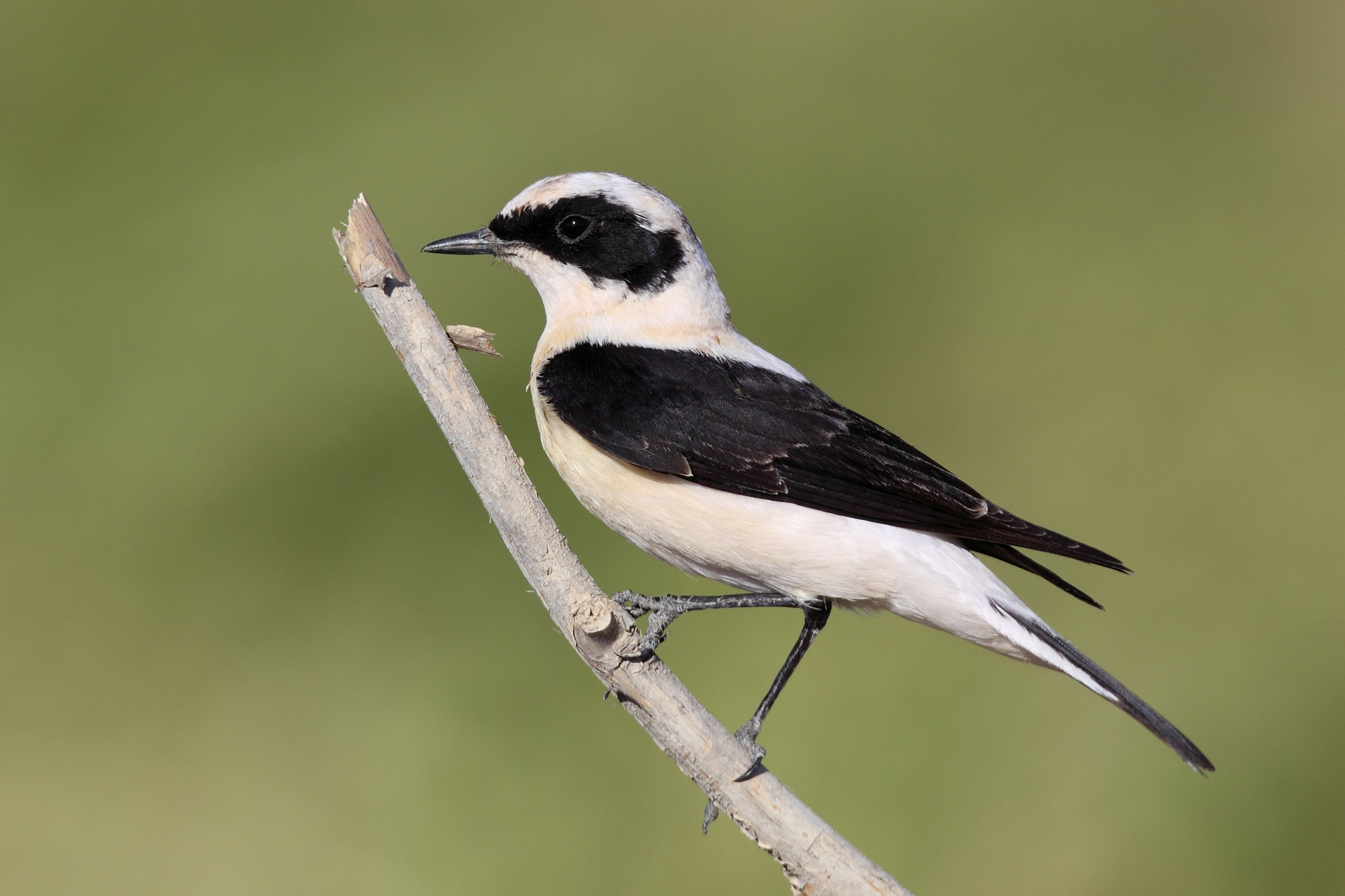
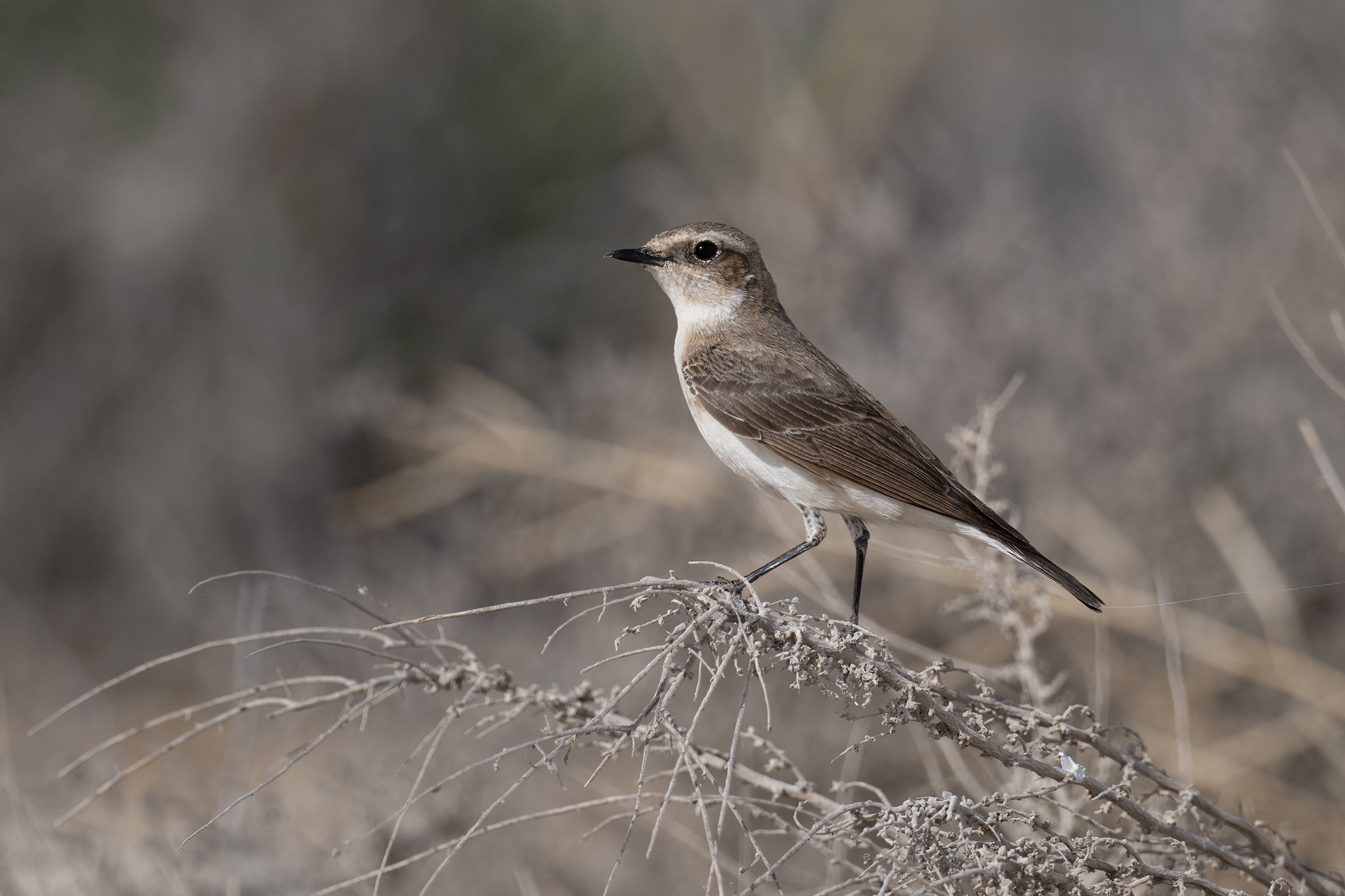
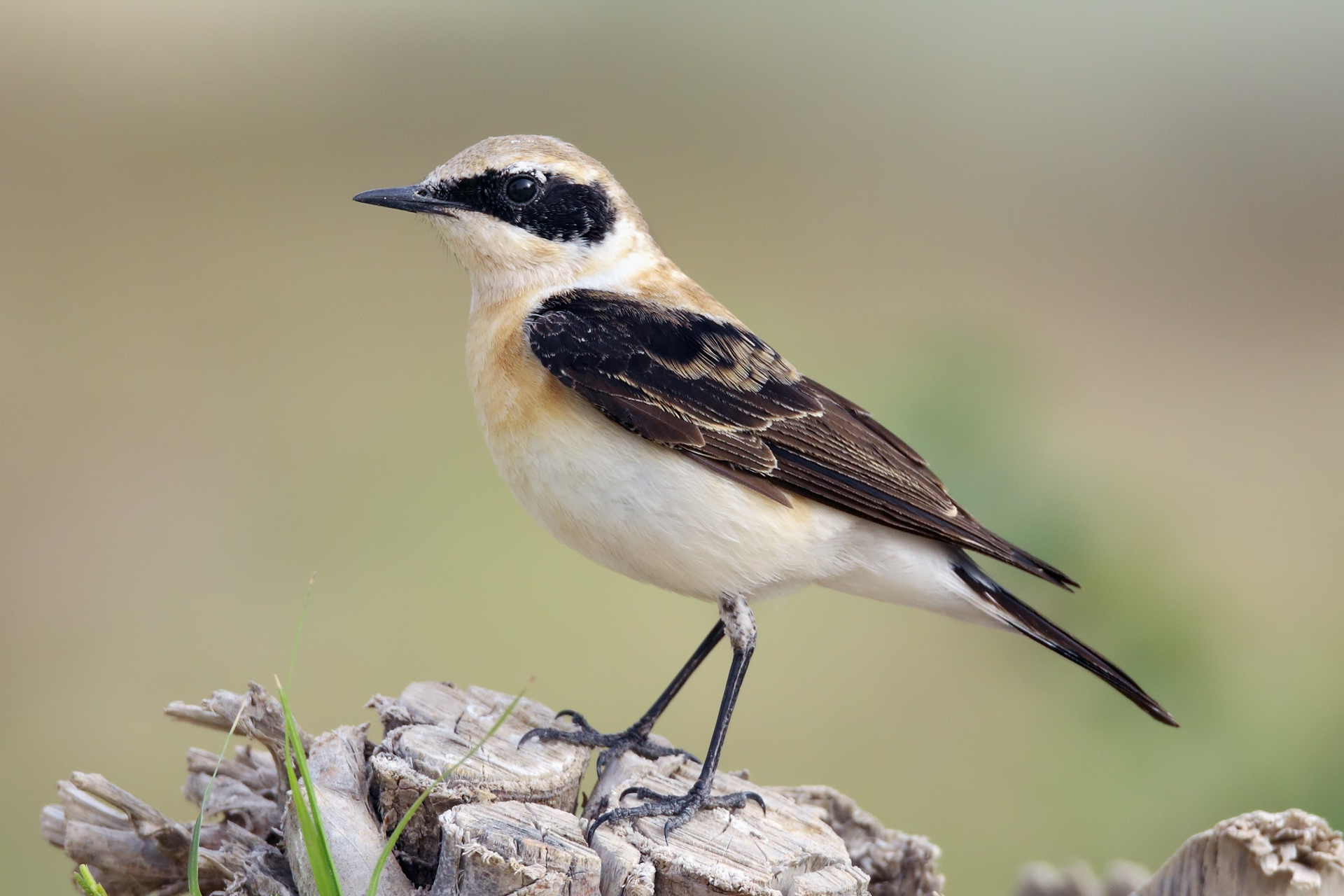
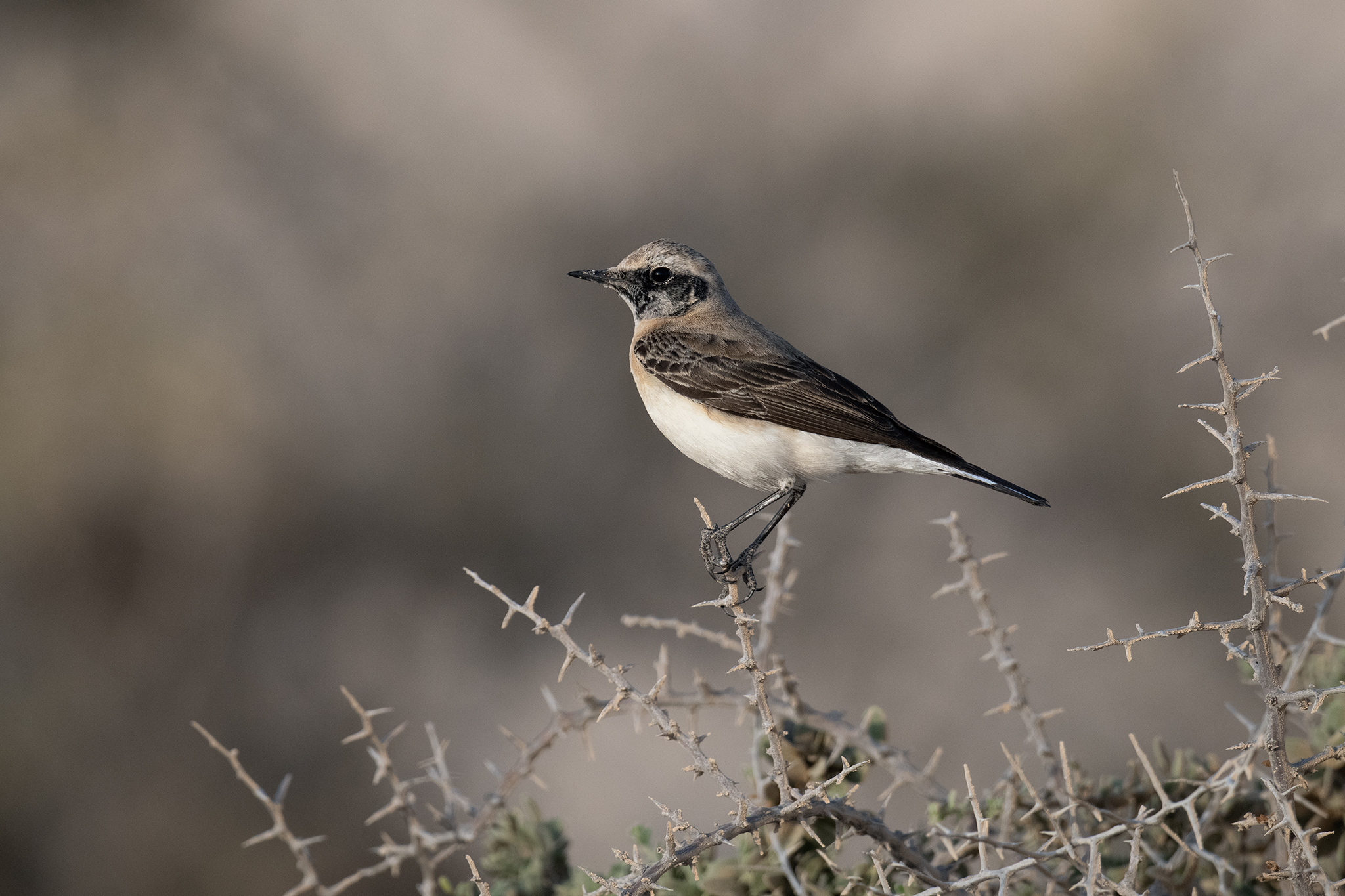
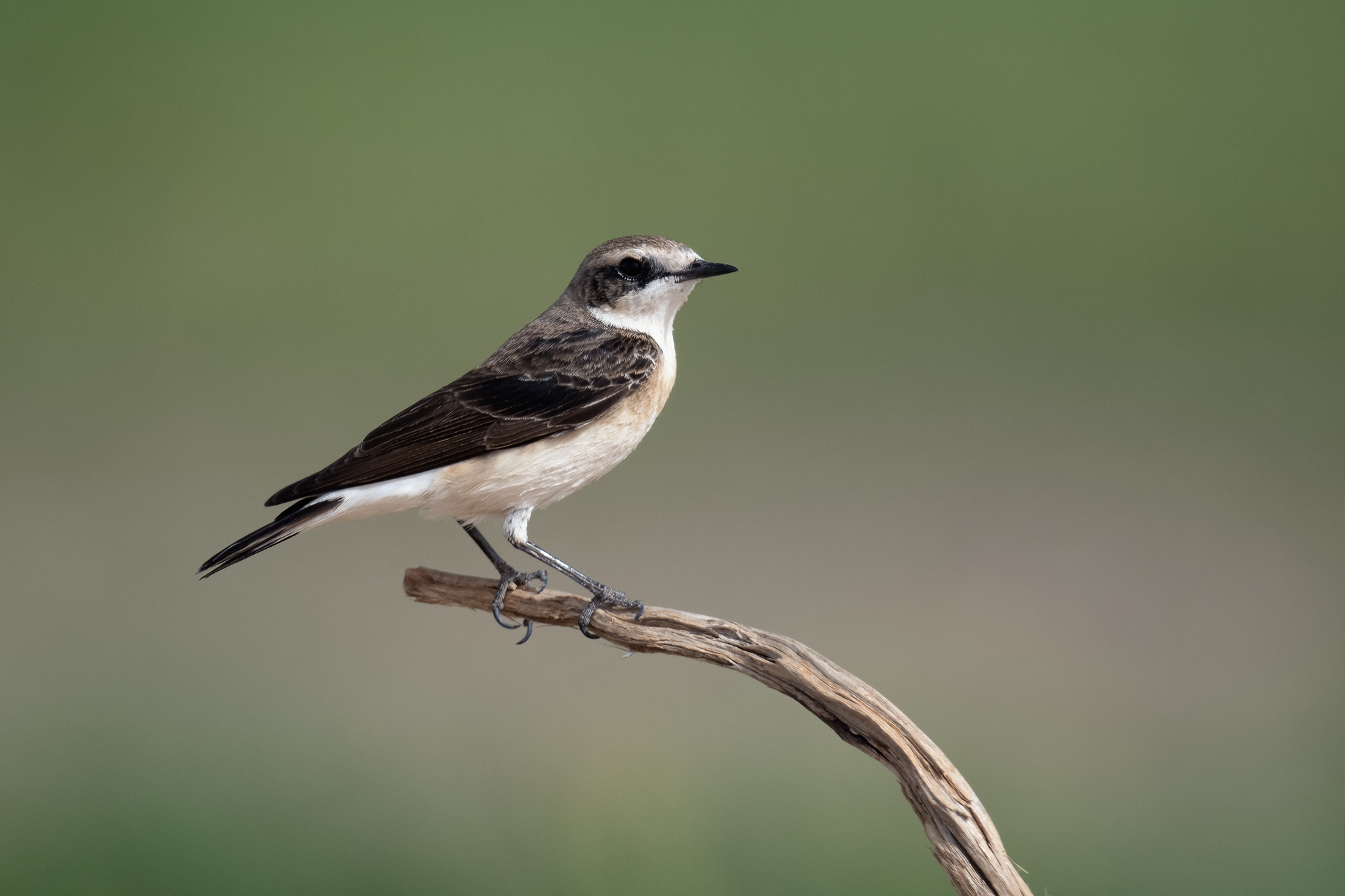
behavior. Habitat & Behavior This bird spends less time on the ground searching for insects compared to the Desert Wheatear. Instead, it often perches on elevated spots and dives down to capture its prey. It thrives in environments that allow for perching and efficient hunting. Appearance & Physical Characteristics Male: Displays a prominent black eye-patch stretching from the cheek to the bill. Black wings, white tail, and white underparts with ochre-shaded mantle and crown. A distinct colored breast with a vivid dark eye-patch, outlined by a pale supercilium. Female: Lighter in coloration, with an ochre mantle and crown. Buff-toned underparts with ochre highlights. A less vivid eye-patch bordered by a pale supercilium. This species is slimmer and has a longer tail than the Northern Wheatear. While they share some features, such as the black eye-patch and black wings, they differ in tail shape and wing visibility. Call The Black-eared Wheatear produces a dry, hoarse call resembling "chercher," accompanied by short sequences of trills and harsher notes. Size and Comparison This wheatear is slender with a longer tail than the Northern Wheatear. Its hunting strategy and appearance also set it apart from the Desert Wheatear. Seasonal Presence The Black-eared Wheatear is observed in Qatar primarily during spring (April) and occasionally in autumn (October) as it passes through on migration. |



© 2026 Qatar Bird Observation Group